
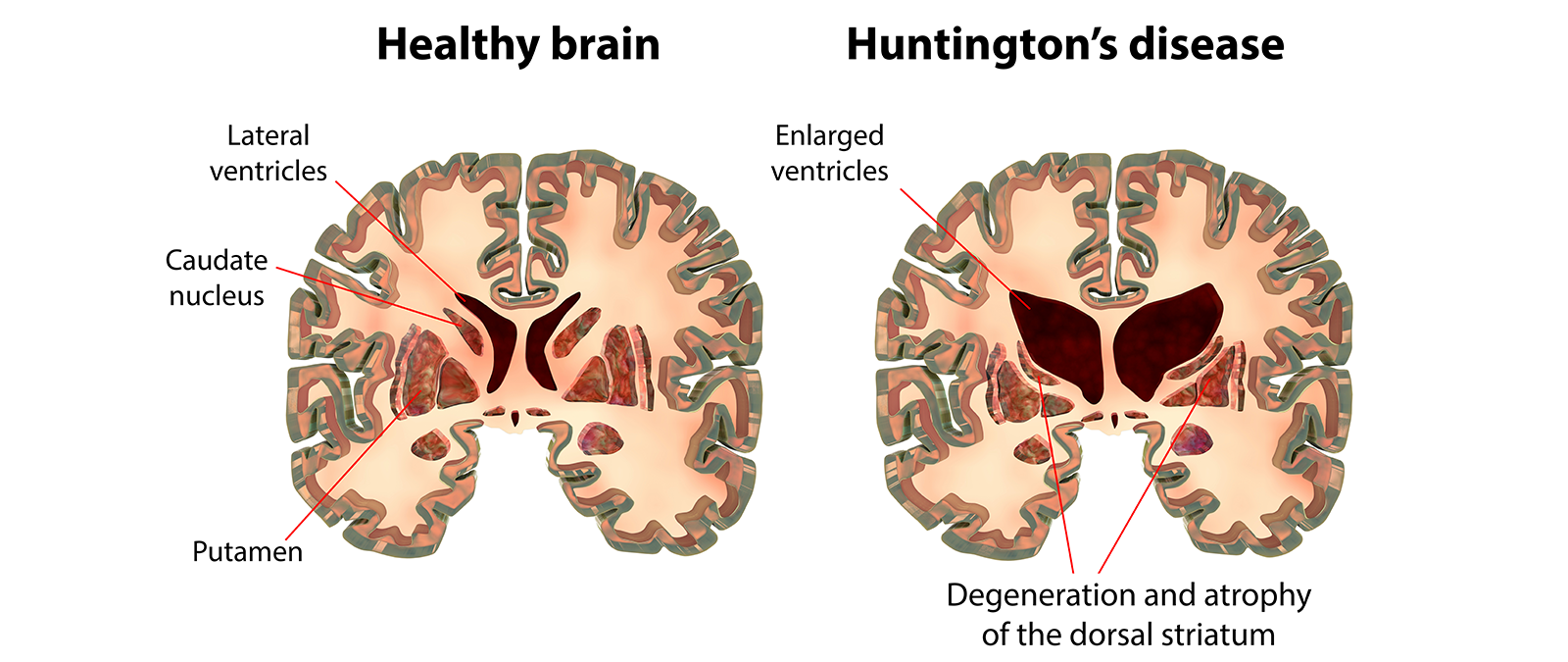


Huntington's disease (HD) is a hereditary neurodegenerative disorder that causes the progressive breakdown of nerve cells in the brain. This degeneration leads to a range of symptoms including uncontrolled movements, cognitive decline, and psychiatric issues. While there is currently no cure, treatments can help manage the symptoms and improve quality of life.
Key Characteristics:
Inherited: HD is caused by a mutation in a gene passed down from a parent.
Progressive: The disease worsens over time, impacting movement, cognition, and behavior.
Symptom Management: Medications, therapy, and other interventions can help manage symptoms.
Symptoms:
Movement: Involuntary jerking or twitching movements (chorea), difficulty with balance and coordination.
Psychiatric: Depression, anxiety, irritability, apathy, mood swings, and other changes in personality.
Epidemiology in the United States
The estimated prevalence of Huntington’s Disease in the U.S. is approximately 4.1 to 5.0 per 100,000 people.
This translates to around 30,000 individuals currently living with HD in the U.S.
An additional 150,000 individuals may be at risk due to family history, as HD is inherited in an autosomal dominant pattern.
Overview:
NA-841 is an investigational small-molecule drug developed by Biomed Industries, Inc. for the treatment of Huntington's disease (HD)—a progressive neurodegenerative disorder caused by mutations in the huntingtin gene.
Mechanism of Action:
NA-841 selectively reduces the levels of both normal and mutant huntingtin (HTT) protein. In parallel, it enhances neuroprotection and mitigates neurodegeneration, aiming to restore neuromuscular function and cognitive performance in individuals with HD.
Route of Administration:
NA-841 is administered orally as a once-daily tablet, offering a convenient therapeutic option for patients.
Clinical Trials:
NA-841 has demonstrated a proof of safety and efficacy in Phase 1 study, including dose-dependent reductions in huntingtin protein levels and early indications of clinical benefit in Huntington patients. Biomed will soon start Phase 2 trials to evaluate the safety, efficacy, and long-term outcomes of NA-841 in individuals diagnosed with Huntington’s disease.
For further information about our products, please contact us. Contact us